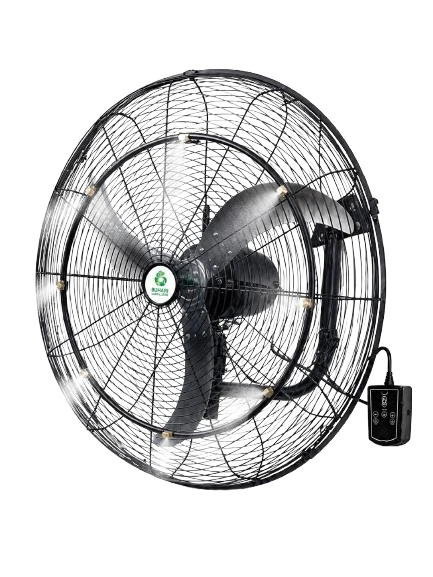
Where Does a Mist Fan Work Best?
A mist fan combines directed airflow with finely atomized water for open or naturally ventilated semi-open spaces. Restaurant patios, hotel outdoor areas, event zones and shaded waiting areas are common applications where local comfort matters more than cooling an entire outdoor environment.
Effective performance depends on more than fan diameter. Nozzle quality, water pressure, prevailing wind, distance from people and the overlap between units must be planned together to limit unnecessary surface wetting.
Comfort-zone designAirflow is aimed at occupied zones instead of wasting capacity on unused parts of the site.
Balanced placementUnit angle and spacing are coordinated with seating, walkways and natural wind so adjacent fans support rather than oppose one another.
How Does a Mist Fan Create a Cooling Effect?
A pump supplies water to atomizing nozzles while the fan carries the droplets through the target area. Under suitable temperature and humidity conditions, part of the water evaporates and supports heat exchange; continuous air movement also improves perceived comfort.
Restaurant patios
Hotel outdoor areas
Event and queue zones
Open workstations
What Site Data Is Needed Before Selecting a Mist Fan?
Area dimensions, shade, open sides, daily operating hours, available power and water quality should be confirmed. A self-contained tank model and a mains-connected unit solve different operating needs.
Compare pump and nozzle design, spare-part availability, maintenance, expected sound level and after-sales support—not only the purchase price or a claimed maximum coverage area.
Mist Fan: Final unit quantity, capacity and placement should be confirmed from measured site conditions.