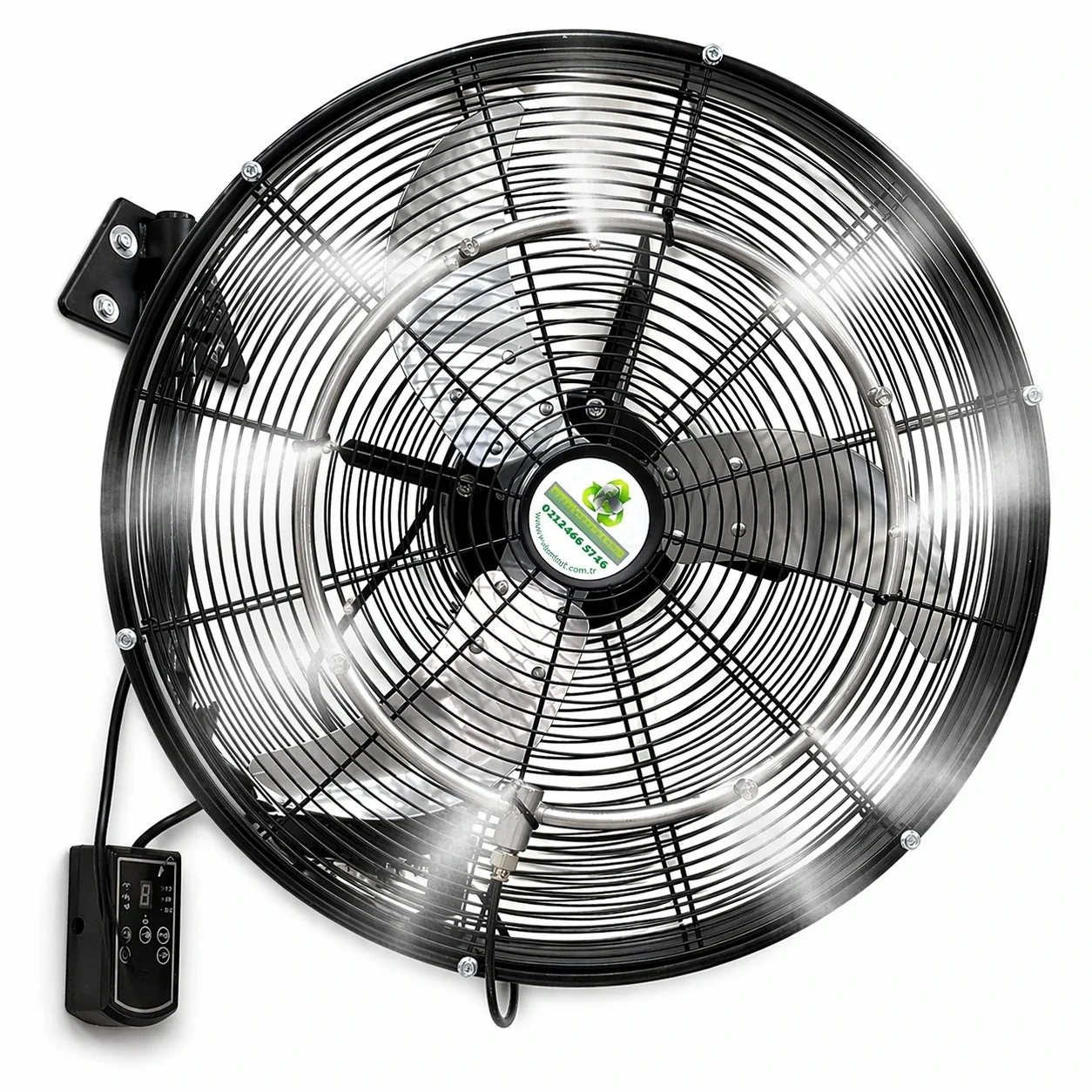
When Is an Evaporative Mist Cooling Fan Appropriate?
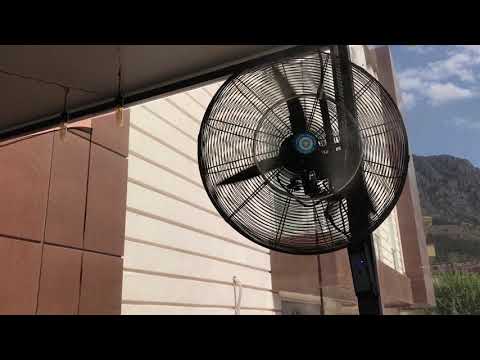
An evaporative mist cooling fan is considered where solar gain, hot surfaces or process heat affect an open or highly ventilated area. Loading zones, covered outdoor work areas, terraces and event sites can benefit when ambient humidity and airflow support evaporation.
Square metres alone do not describe the heat load. Sun exposure, roof material, nearby equipment, air entry points and whether people are stationary or moving all influence the required airflow and water output.
Heat-load reviewSolar, structural and process-related heat sources are identified before unit quantity is estimated.
Air-path planningFan direction is coordinated with natural ventilation so hot air is not trapped or pushed into another occupied zone.
How Does Evaporative Mist Cooling Work?
Fine droplets have a large surface area. When conditions allow them to evaporate, they absorb heat from the surrounding air, while the fan disperses the mist and breaks up stagnant hot layers. High humidity or enclosed spaces require a different expectation and a site check.
Sun-exposed terraces
Open production bays
Loading and dispatch zones
Large event sites
How Are Capacity and Spray Output Determined?
Fan airflow, spray volume and unit count are matched to site openness and wind. Droplets need enough distance to disperse before reaching people, stock or equipment, making angle and setback critical.
Where water is hard, filtration and planned nozzle service should be included. Electrical supply, drainage risk and operating schedule must also be confirmed before installation.
Evaporative Mist Cooling Fan: Final unit quantity, capacity and placement should be confirmed from measured site conditions.